
BrainWaves - Testing Our Solution for Hybrid Participation
1 mrt 2024
Table of Contents
A Wishlist for the future of Eindhoven
Lessons Learned and Future Directions
The Story Behind BrainWaves
BrainWaves - Results
Last Thursday, February 22nd, we all dove into BrainWaves: a dynamic, hybrid event to discuss Eindhoven's future. This was the first public showcase of Common Ground, the online dialogue platform we developed for Democratic Inputs to AI grant program. Engaging over 50 people in 60 different conversations, we racked up approximately 20 hours of vibrant discussion about the future of Eindhoven, all from the comfort of our couches and kitchen tables, in a single rainy evening.
As a test, the event was a first in the Netherlands, being the very first city-wide dialogue with AI in a facilitating role. The feedback was overwhelmingly positive, despite some technical teething problems experienced by many participants. A common sentiment was that people found it interesting and enjoyable to engage in conversations with strangers.
A hypothetical “Wishlist for Eindhoven”
This wish list was created based on both quantitative and qualitative analysis. This means we tallied the votes on the propositions to gauge "support" - and we also qualitatively analysed the conversation transcripts to find quotes that add more depth to the propositions.
Disclaimer
Important to note: In a “real” deliberative event, these results would have to be traceable, reproducible and representative. These results are neither of these!
We have not published the raw data therefore it is not traceable. We do want to publish the data, but it will take a little while to design and validate a system for publishing everything relevant without publishing personal data of the participants.
We have not aimed for reproducibility. This test is a proof of concept an while we are building towards systems with reproducible outcomes, that wasn’t the goal of this test.
50 people - mostly friends of Dembrane - took part. This is a special group of people, but in no way representative of Eindhoven as a whole. For that, we would need to work with our partners the Sortition Foundation to select a group of 100+ people via two step stratified random sampling.
The images are from around and near Eindhoven or generated with Mid-journey. The quotes were translated from Dutch but aim to preserve the character of the originals.
Thank You for Making This Experiment Possible
Firstly, our thanks to our direct partners. Your work enabled us to create a world first! Thank you Lei, CeesJan, and Rolf. Also, our gratitude to Dynamo for providing the location and to Fontys for enabling student sessions to gather statements.
Lastly, our thanks to all the participants! Last Thursday, you pioneered the Netherlands' first city-wide discussion through AI. Your feedback is incredibly valuable! We do want to apologise for inconsistencies in both the communication, and the app itself (we are reminded once again that we are a tech startup, not an event organizer). Therefore, it's wonderful to read that, despite this, most of you had a positive experience and definitely see the potential in the platform.
We couldn't wait and have already started working hard to make complex conversations concrete on a large scale. On our way to a world where every community has the opportunity to engage in substantive conversations that connect and enable collective action.
The Dembrane Team
People know how
Lessons Learned and Future Directions
Participant experiences
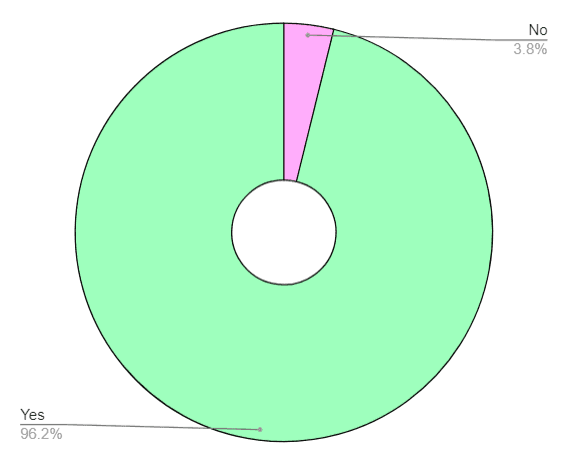
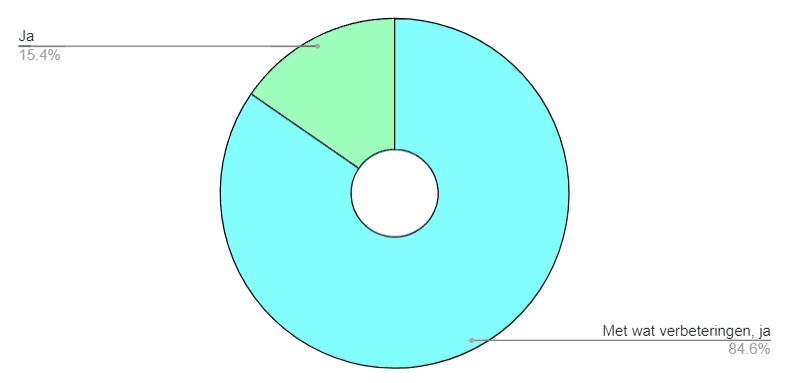
We measured the participant experience in two ways, via an analysis of the transcripts and, to compare, with a feedback form. This means we have two kinds of results: insights into the participant experience AND a comparison between our method and a standard survey. Despite many experiencing technical issues, the vast majority reported having a pleasant experience. People mentioned enjoying meeting others and hearing their ideas.
Did you enjoy yourself?
"Do you think this platform can be used for a substantive city-wide discussion?”
Quotes from the feedback form
Roadmap
This demo and public text showed us what's possible: 60 different conversations distilled into an insight understandable to everyone!
Teething problems are inevitable in a first test, and there were certainly some present. For instance, there were various audio issues, and there was criticism of the app’s design and the consistency of the AI moderator.
We fully analysed the feedback from both the form and the conversations themselves and interestingly, there were no problems mentioned in the feedback form that weren't already evident from the conversations. Furthermore, points 3. Conversation Process and 6. Accessibility and Inclusivity were not mentioned in the feedback form. This goes to show that our process is more context rich than a traditional survey and that you learn the most by bringing people together and allowing them to speak freely, not by sending limited surveys. People Know How!
We have listed the most frequently mentioned issues, along with the conversations in which these problems were encountered and steps we will take.
Want to explore the options to collaborate?
The story behind Brainwaves
You've probably been to a meeting, conference, a brainstorm session, you may have heard someone say these words when heading off to the bar or the coffee stand:
"That's where the best conversations happen anyway."
It's in these chance encounters and conversations between people that some of the most exciting things can happen. It is in these unexpected, serendipitous moments that so much value can be found and that's one of the initial flashes of inspiration for why we founded Dembrane: We wondered:
Can we build a system that captures the water cooler conversation, that captures the ‘coffee machine’ conversation, where people just say what's on their mind?
Why would we want to do that?
Society is in the middle of an enormous transition. We need to start making epic plans and we need to start gearing up the transitions that will change the way we live, that will change our culture, that will change our way of working - and we can try and do that in a top-down way - we all have a feeling for how that ends (badly). We can also try engaging with people with surveys, focus groups and co-creation and we all know how hard that is.
That's why Dembrane is building systems that help communities get smarter as they get larger, by just letting the conversation happen and really listening to people. Our system identifies which ideas have popular support, we can elevate those ideas and bring them back to the community in an open way.
It's so common in stakeholder engagement processes, especially with the general public, that there's an intense lack of trust. And it's often because there's just a lack of transparency and openness because there are conflicting needs. On the one hand, our human needs for community and the willingness to improvise something that feels good, versus the legal stipulations, quality control and financial constraints that reduce risk, keep us safe and keep us financially responsible.
We need to start having more open conversations about these things if we don't want to exacerbate the us versus them dichotomy between those making the decisions and those affected by them. That's clear. That's why we are building what we are building.
The obstacle is the way
Waiting until the software you’re building is “ready” before you put it out into the world robs you of many surprising benefits. That’s why we embrace the fact that we're still evolving. Transparency is key to us – acknowledging where we are and where we aim to be.
Our recent test event, 'Brainwaves' in Eindhoven, was a testament to this open, free dialogue. People connected, conversed, and shared but our system also highlighted disappointments, design flaws and areas for growth. For one, video calling technology still needs to fully mature. We envision a platform where everyone can easily connect, but we're not there yet. Technical glitches – cameras not working, “I can’t hear you, can you hear me?” – are annoyances if you deal with them often, but huge barriers if you’re less familiar with these tools. We need to overcome them not just as Dembrane but as the digital communication community at large.
It's clear that there's immense potential in a platform like Dembrane. We hope our report – showcasing the top 7 most supported ideas, along with our technical roadmap – gives you a sense of what could be.